Does the QS-H13 require a cockpit?
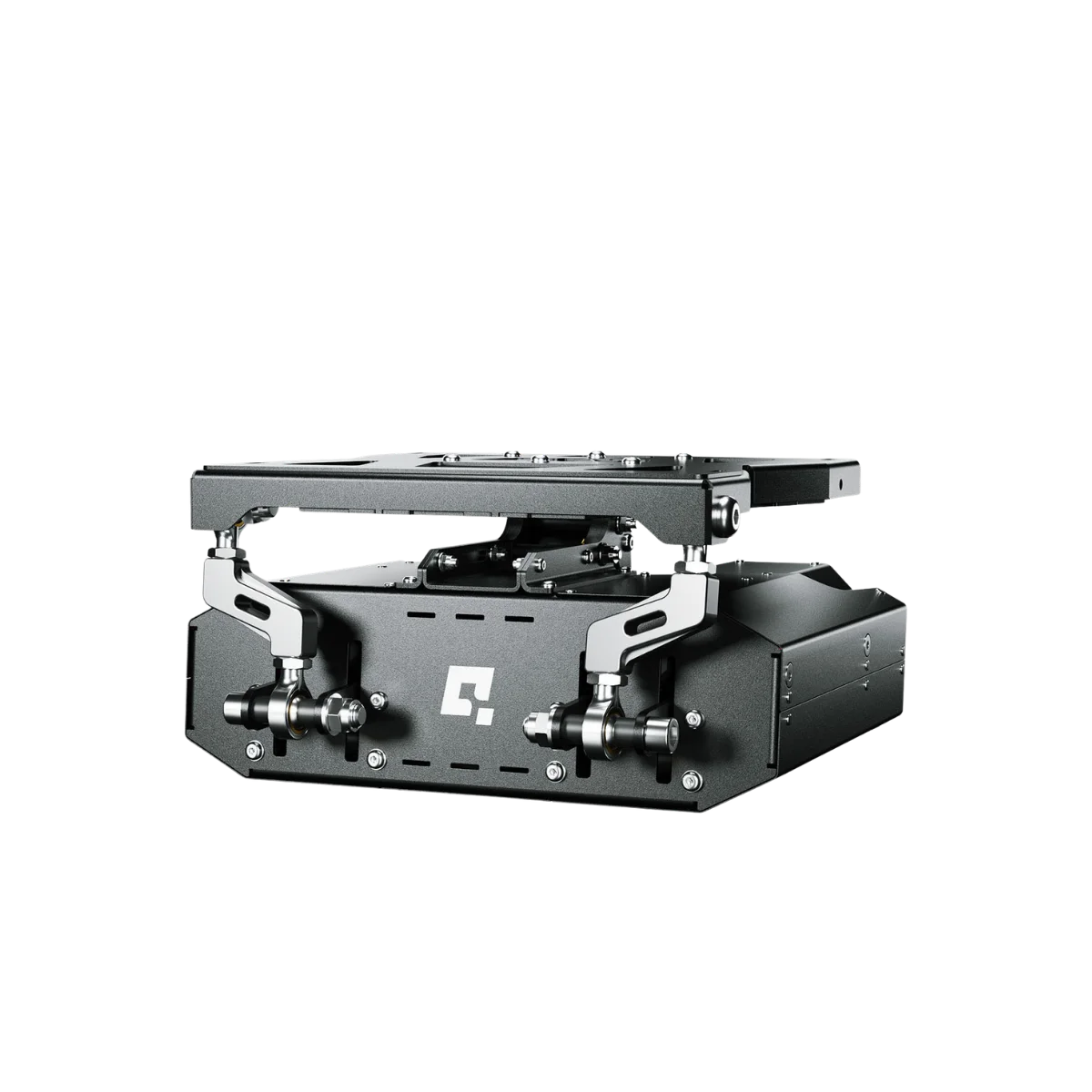
Yes. The QS-H13 must be mounted to a stable aluminum profile cockpit for safety and correct operation. Universal mounting adapters are included.
How loud is the QS-H13?
Under normal operating conditions, the noise level is below 58 dB(A).
Does the QS-H13 transmit vibrations to the floor?
The QS-H13 has no vertical up-and-down movement and is designed not to transfer vibrations to the floor.
Is the QS-H13 compatible with VR and VR HeadWay?
Yes. The QS-H13 is compatible with the VR and VR HeadWay features in Qubic Manager. The software compensates the in-game image according to platform movement.
Can the QS-H13 work with the QS-BT1 belt tensioner?
Yes. The QS-H13 is compatible with the QS-BT1 and can synchronize seat movement with belt tension feedback.
Are QS-BT1 mounting brackets included?
Yes. The QS-BT1 mounting brackets are included with the QS-H13.
How long does installation take?
The QS-H13 is designed for plug-and-play installation. With the included brackets, defined mounting points, and software guidance, most users can complete setup in less than one hour.
Is the QS-H13 compatible with consoles?
No. The QS-H13 works with PC through Qubic Manager. PlayStation and Xbox are not supported.
Why does the QS-H13 not use e-brakes?
Serviceability and noise: e-brakes are non-repairable and contain moving parts that can rattle during vibration and haptic effects. The QS-H13 design avoids this noise source.
Heat, power, and weight: e-brake electromagnets produce more heat than the motors, add mass, and draw additional power. The QS-H13 operates at 46 V for dynamic movement, while most e-brakes use 24 V and would require a second power supply. Motors typically use less power to hold position than e-brakes need to release and hold their internal discs.
Use after power-off: e-brakes are useful only when the unit is completely powered off, which is not a typical operating state for a seat mover.
Power-off behavior: the QS-H13 uses a passive hardware circuit that draws power from the rotating motors and limits their speed. Faster movement generates greater resistance. When power is removed, the seat does not move abruptly. Under load, it shifts slowly and settles.
Is software included?
Qubic Manager is required. The QS-H13 serial number is needed for activation and profile setup. The Qubic Manager license is free of charge.
What power supply is required?
The QS-H13 requires 120/230 ± 10% VAC, 50 to 60 Hz, single-phase power with ground and neutral connections.
What type of seat is recommended?
An FIA-certified racing seat and harness are strongly recommended for safety and correct operation.